Samsung Freezer Error Codes: Fixes and When to Call a Pro
Samsung freezer error codes decoded: learn common faults, safe DIY fixes, and when to call a pro at 8338646908 for fast, reliable repair.

By Rida Zahid
Learn more about Appliance Repair or Maintenance for guides, costs, and what to expect.
Compare Appliance Repair or Maintenance Pros Near You
Enter your ZIP code to compare top-rated local professionals and request free quotes.
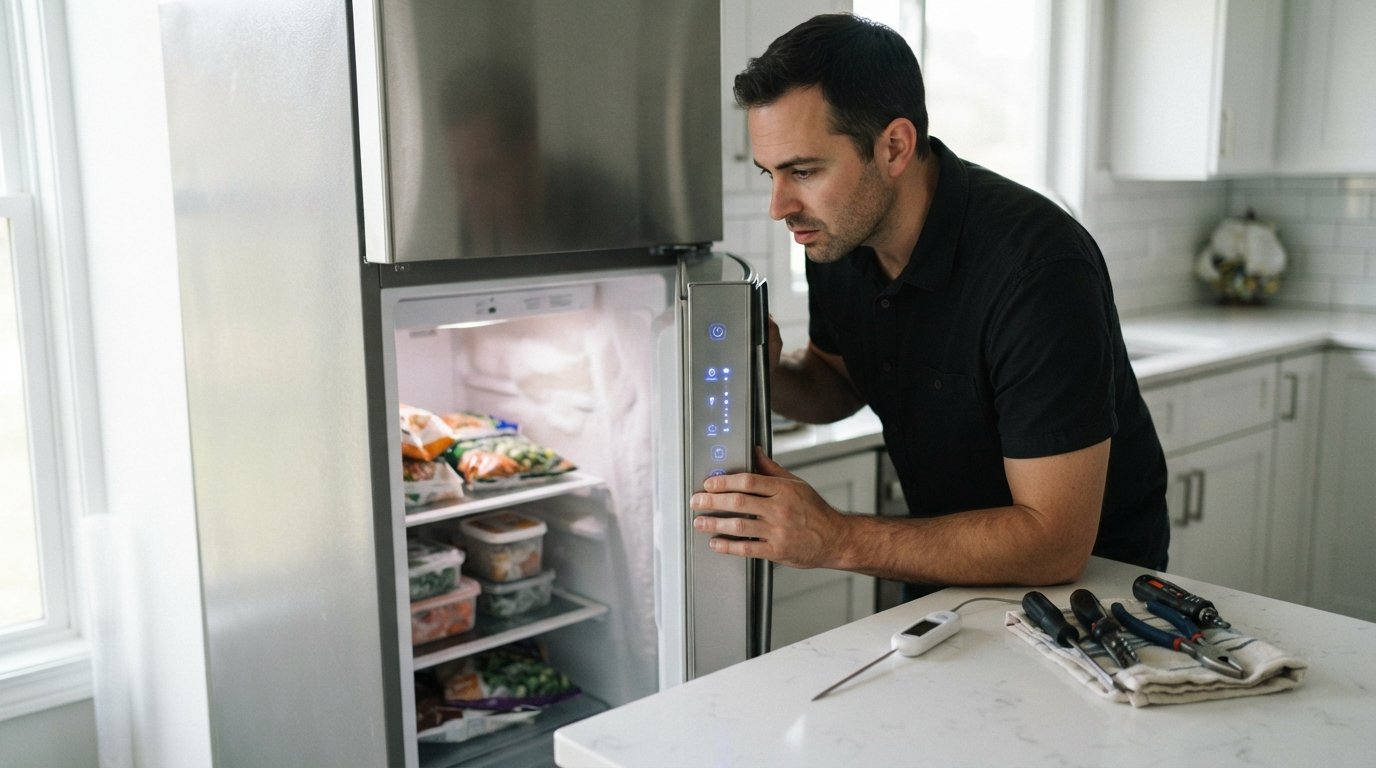
The freezer door is shut, the kitchen is quiet, and yet the ice cream is softening. You glance at the control panel and see a cryptic combination of letters and numbers blinking back at you. Samsung freezers are packed with sensors and diagnostic logic, which is great for performance but frustrating when something goes wrong. Those blinking codes are not random: they are the appliance telling you exactly which system has drifted out of range. The trick is knowing which codes you can safely handle yourself and which ones demand a licensed technician.
This guide breaks down the most common Samsung freezer error codes, walks through realistic troubleshooting steps, and explains when it makes financial sense to call a professional. If at any point you feel out of your depth, you can connect with vetted appliance repair pros through Repairmen's nationwide network and get free quotes before you commit to anything.
Why Samsung Freezers Display Error Codes
Samsung freezers, whether standalone units or the freezer section of a French door refrigerator, rely on a network of thermistors, fans, defrost heaters, and a main control board. Each component reports back to the board, and when a reading falls outside the expected range, the board logs a fault and displays a code. This is a diagnostic feature, not a punishment. It narrows down the problem so you or a technician do not have to guess.
Codes generally fall into a few families. Temperature sensor faults, defrost system faults, fan motor faults, communication errors between boards, and power or voltage irregularities. Understanding the family a code belongs to helps you decide how urgent the situation is. A sensor fault might mean inaccurate temperature readings, while a defrost fault can lead to ice buildup that eventually blocks airflow and spoils food.
One important caveat: Samsung uses similar code formats across different model years, but the exact meaning can shift. Always check the label inside your freezer or the user manual for your specific model number. If the manual is long gone, Samsung's support site lets you search by model. When in doubt, treat the code as a starting point, not a final verdict.
The Most Common Samsung Freezer Error Codes and What They Mean
Below are the codes homeowners run into most often. Some appear on the freezer display itself, while others show on the main refrigerator panel. The list is not exhaustive, but it covers the majority of service calls.
- 22E or 22C: Freezer temperature sensor fault. The sensor is reading outside its expected range, which can cause the compressor to run constantly or not at all.
- 21E or 21C: Fridge temperature sensor fault. Often paired with 22E when the main board is confused about overall temperature.
- 24E or 24C: Freezer defrost sensor fault. The defrost heater may not be activating correctly, leading to frost buildup.
- 33E: Defrost heater or defrost circuit fault. This is one of the more serious codes because it directly affects the freezer's ability to shed frost.
- 39E or 39C: Communication error between the main board and the inverter board. The compressor may stop receiving commands.
- 41E or 41C: Ice maker sensor fault. Not a food safety issue, but the ice maker will stop working.
- 85E: Power or voltage error. Often appears after a brownout or surge.
If you see 33E specifically, it is worth reading a focused breakdown. Our guide on Samsung freezer error code 33E troubleshooting covers the defrost circuit step by step, including how to test the heater and the thermal fuse. That code tends to recur if you only reset the unit without addressing the underlying fault.
Some codes are intermittent. You might see one flash once and never again. If the freezer is holding temperature and the code disappears after a power cycle, it may have been a transient glitch. But if the same code returns within a day or two, treat it as a real fault. Intermittent codes that are ignored often turn into full failures at the worst possible time.
Quick Checks Before You Do Anything Else
Before you pull out a multimeter or start unplugging harnesses, run through the basics. A surprising number of error codes trace back to simple issues that have nothing to do with failed parts.
- Power cycle the freezer. Unplug it or flip the breaker off for five full minutes, then restore power. This clears transient faults and lets the board restart its diagnostics.
- Check the door seal. A gasket that is torn, dirty, or not sealing lets warm air in, which forces the freezer to overwork and can trigger sensor codes.
- Confirm airflow. Make sure the freezer is not packed so tightly that vents are blocked. Leave a few inches of clearance around the interior vents.
- Inspect for frost. Heavy frost on the back wall suggests a defrost problem, which points toward codes like 24E or 33E.
- Verify power quality. If your home recently had a surge or brownout, the 85E code may be a one-time event. A surge protector can prevent repeats.
If the code clears and stays gone, you likely dodged a bullet. If it comes back, you have narrowed the problem to a specific system. That is valuable information whether you fix it yourself or hand it to a technician.
DIY Troubleshooting: What Is Safe and What Is Not
There is a clear line between homeowner-friendly troubleshooting and work that belongs in the hands of a licensed professional. Safe tasks include power cycling, cleaning condenser coils, checking door seals, and clearing obstructions from vents. These require no tools beyond a vacuum and a damp cloth.
Moderately safe tasks include testing a thermistor with a multimeter if you are comfortable with basic electrical testing, and replacing an ice maker sensor on models where it is accessible without disassembling refrigerant lines. If you are not comfortable, do not force it. A cracked connector or a pinched wire can turn a simple repair into an expensive one.
Tasks that are not DIY-friendly include anything involving the sealed refrigerant system, the inverter compressor, or the main control board on models where it is buried behind multiple panels. Refrigerant work requires EPA certification and specialized equipment. Control board replacement often requires pairing or programming that only a technician with the right tools can complete. Attempting these repairs yourself risks voiding your warranty, damaging other components, and creating a safety hazard.
If you decide to call a pro, compare quotes before you commit. Repairmen lets you request up to four free, no-obligation quotes from vetted local technicians, which takes the guesswork out of pricing. You can describe the code, the model, and the symptoms, and get a realistic estimate rather than a surprise bill.
When to Call a Professional for Samsung Freezer Error Codes
Some situations are unambiguous. If the freezer is not cooling at all, if you see 33E or 39E repeatedly, if you smell burning, or if you see water pooling where it should not be, stop and call a technician. Food safety is the priority. A freezer that has been above 40 degrees Fahrenheit for more than two hours should have its contents evaluated carefully, and anything questionable should be discarded.
Other situations are judgment calls. A single sensor code that clears after a power cycle might not justify a service call. But if the same code returns, or if you notice the compressor running constantly, the freezer is working harder than it should. That drives up energy bills and shortens the life of the appliance. In those cases, a diagnostic visit is usually cheaper than waiting for a full breakdown.
It also helps to know the age of your freezer. If it is under warranty, call Samsung or an authorized service provider first. If it is out of warranty and the repair estimate exceeds half the cost of a new unit, replacement may be the smarter financial move. A technician can give you that comparison honestly, and a platform like Repairmen can connect you with someone who will explain the tradeoffs rather than push a sale.
Preventing Future Error Codes
Prevention is mostly about airflow, cleanliness, and stable power. Vacuum the condenser coils every six to twelve months, especially if you have pets. Check door gaskets quarterly by closing a dollar bill in the door and tugging gently; if it slides out easily, the seal is weak. Keep the freezer about two-thirds full for efficient thermal mass, but do not block vents.
Consider a whole-home surge protector or at least a quality surge strip for the outlet serving the freezer. The 85E code often appears after electrical events, and protecting the control board is far cheaper than replacing it. If your home experiences frequent brownouts, an electrician can evaluate whether the circuit is overloaded.
Finally, pay attention to small changes. A freezer that runs a little longer, frosts a little faster, or makes a slightly different noise is telling you something. Addressing those early signals is almost always cheaper than waiting for a code to appear. If you are not sure what you are hearing or seeing, a professional diagnostic can catch problems before they become emergencies.
In our guide on LG freezer error code Er IF causes and fixes, we cover a different brand's communication fault, but the diagnostic mindset is the same: identify the system, test the components, and decide whether the fix is within your comfort zone. That approach works across brands and models.
Understanding Repair Costs and Your Options
Costs vary widely by region, model, and the specific part involved. A thermistor replacement is usually on the lower end, while a compressor or control board replacement sits at the higher end. Labor rates in major metro areas tend to be higher than in rural areas. The best way to get a realistic number is to describe the code and symptoms to a few local technicians and compare quotes side by side.
Repairmen was built for exactly this situation. You submit your issue, receive up to four free quotes from vetted professionals, and choose the one that fits your budget and timeline. There is no obligation to book, and you can ask questions before committing. For homeowners who are tired of playing phone tag with service departments, that alone saves hours.
If your freezer is older and the repair is significant, ask the technician for a straight comparison between repair and replacement. Sometimes repair is the clear winner; sometimes replacement makes more sense. Either way, you deserve a clear explanation, not a sales pitch. The right professional will give you both the diagnosis and the honest recommendation.
Samsung freezer error codes are intimidating at first glance, but they are really just the appliance asking for help. Start with the simple checks, respect the limits of DIY, and call a pro when the code points to sealed-system or board-level work. With the right approach, you can protect your food, your budget, and your peace of mind.