Amana Range Error Code F1E0: Fix It Fast
Amana range error code F1E0 usually points to a sensor or wiring fault. Follow our reset and test steps, or call (833)-864-6908 for vetted local repair help.

By Adnan Nazir
Learn more about Appliance Repair or Maintenance for guides, costs, and what to expect.
Compare Appliance Repair or Maintenance Pros Near You
Enter your ZIP code to compare top-rated local professionals and request free quotes.
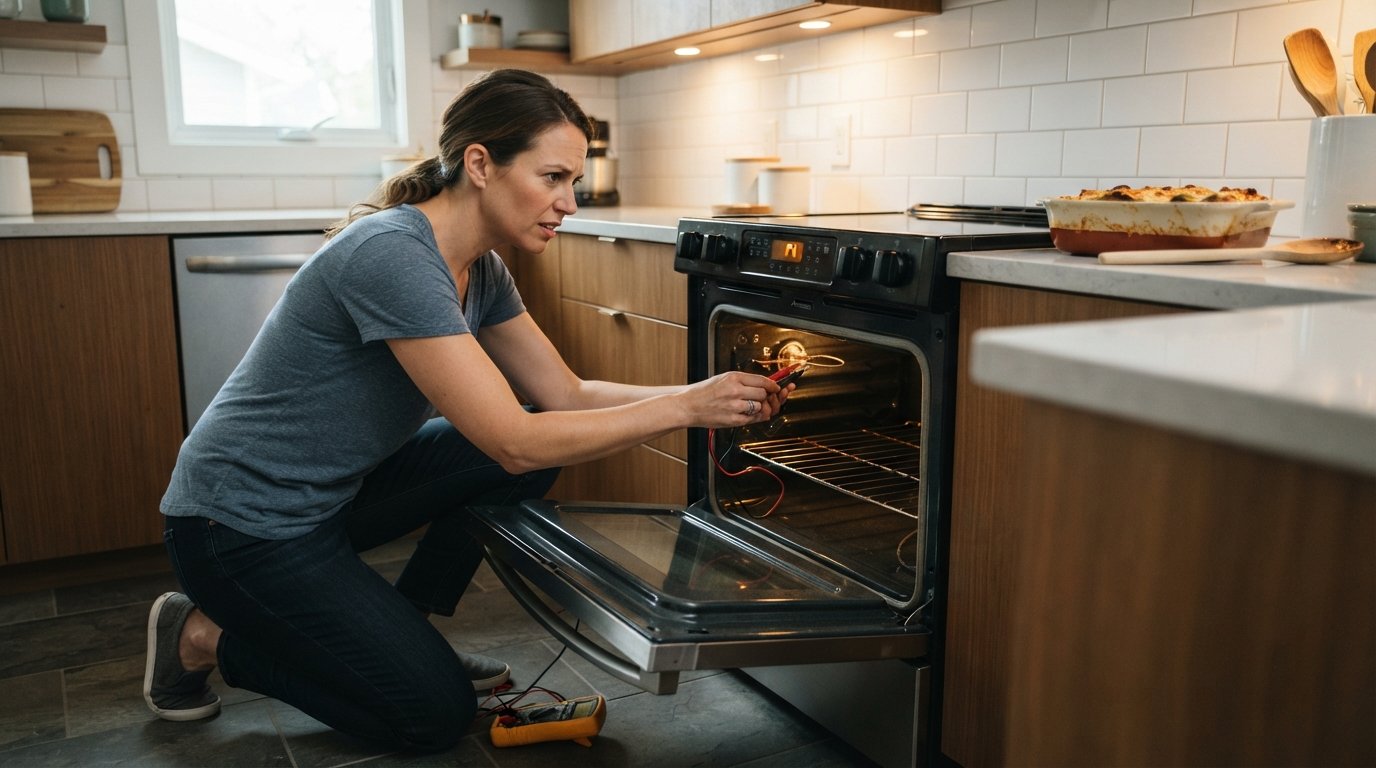
A flashing F1E0 on your Amana range can bring dinner plans to a halt. One minute you are preheating for a casserole, and the next the display is locked on a code that makes no sense. The good news is that F1E0 is a known fault with a defined troubleshooting path, and many homeowners can resolve it without a service call. This guide explains what the code means, why it appears, and how to decide between a quick DIY check and calling a vetted professional through Repairmen.
What Amana Range Error Code F1E0 Actually Means
Amana uses a family of F codes to report communication and sensor problems, and F1E0 falls into that group. In most Amana and related Whirlpool Corporation range platforms, F1E0 indicates that the main control board has lost reliable communication with the oven temperature sensor circuit or the user interface. In plain terms, the appliance's brain cannot get a clear reading from a component it depends on, so it shuts down cooking functions and displays the code as a safety measure.
It helps to think of the range as a small network. The control board sends a signal, the sensor or interface responds, and the board confirms the reading. When that handshake fails, even briefly, the board logs an error and refuses to heat. That is why an F1E0 often appears at startup or shortly after you press Bake. The range is protecting itself from a condition it cannot verify, such as an overheating sensor or a shorted wire.
Because the exact meaning can vary slightly by model, the first step is always to locate your model and serial plate, usually on the oven frame or back panel, and check the owner's manual fault code table. If the manual lists F1E0 as a sensor or communication fault, the steps below apply. If your manual is missing, the Amana support site and the model plate are your best references.
Common Causes Behind the F1E0 Code
In the field, technicians see a handful of repeat offenders for Amana range error code F1E0. The most frequent is a failed oven temperature sensor, a relatively inexpensive part that drifts out of range as it ages. Heat, spills, and self-clean cycles accelerate that wear. The second most common cause is a loose or damaged wire harness between the sensor and the control board, especially on ranges that have been moved for cleaning or remodeling.
Control board faults come next. A power surge, a lightning strike, or simple component fatigue can damage the board's communication circuit. Less often, the user interface membrane or touch panel develops a fault that mimics a sensor error. Finally, installation issues matter: a range plugged into a worn outlet, an improperly grounded circuit, or a shared circuit with a high-draw appliance can create voltage irregularities that trigger intermittent codes. If the code appears only when the oven heats, a sensor or harness issue is more likely. If it appears immediately at power-up, board or interface problems move up the list.
- Failed oven temperature sensor (most common)
- Loose, pinched, or corroded wire harness
- Control board communication fault
- User interface or touch panel failure
- Power supply or grounding problems
Notice that the list moves from simple and cheap to complex and costly. That order matters when you troubleshoot, because you want to rule out the five-dollar connector before condemning a three-hundred-dollar board.
Safety First: Before You Touch Anything
Ranges combine high voltage, high heat, and gas in some configurations, so safety is not optional. Before any inspection, switch off the circuit breaker that feeds the range and confirm the display is dark. If you have a gas range, also shut off the gas supply valve behind the unit. Never pull a range forward without protecting the floor and never work on it while it is hot.
If you smell gas at any point, stop immediately, leave the home, and call your gas utility from outside. Do not flip switches or unplug cords in a gas smell situation. For electric ranges, give the oven time to cool completely, then unplug the unit or confirm the breaker is off. If the outlet is not accessible, the breaker is your only safe disconnect, so label it clearly before you begin.
One more caution: modern ranges contain sensitive electronics. Avoid touching the control board with bare hands if you have static buildup, and never spray cleaners into the display area. If at any point you feel unsure about the next step, that is the moment to bring in a licensed appliance technician through a platform like Repairmen, which pre-screens local pros and lets you compare quotes before committing.
Step-by-Step Troubleshooting for Amana Range Error Code F1E0
Work through these steps in order and test the range after each one. Many homeowners find the fix in the first three steps, which cost nothing but time.
- Reset the range. Turn off the breaker for at least five minutes, then restore power. A transient glitch clears on reset more often than people expect. If the code returns immediately, continue.
- Inspect the oven temperature sensor. With power off, locate the sensor probe inside the oven, usually at the upper left rear. Check for visible damage, heavy buildup, or a loose connector at the back of the range. Clean gently and reseat the plug.
- Check the wire harness. Pull the range forward carefully and inspect the wires running from the sensor to the control board. Look for pinched insulation, scorch marks, or loose pins. A damaged harness is a common hidden cause.
- Test the sensor resistance. If you own a multimeter, unplug the sensor and measure resistance across its terminals. Most Amana sensors read roughly 1,080 to 1,100 ohms at room temperature, and the value should rise as the sensor warms. A reading far outside that range or an open circuit points to a failed sensor.
- Inspect the control board and interface. Look for burn marks, bulging capacitors, or loose ribbon connectors. If the board shows damage, replacement is usually the answer.
If the reset clears the code but it returns days later, keep a simple log of when it happens: at preheat, mid-bake, after self-clean, or during a power flicker. That pattern is gold for a technician, because it narrows the fault to a specific circuit. For a parallel example of how sensor and communication faults are diagnosed on another brand, our guide on Kenmore range error code F1 diagnosis walks through a nearly identical process and reinforces why the reset-and-test approach saves money.
When to Replace the Sensor, the Board, or Call a Pro
Part costs drive the decision. An oven temperature sensor for an Amana range typically runs 20 to 50 dollars, and replacement takes about 20 minutes with basic hand tools. A control board usually costs 150 to 350 dollars depending on the model, and installation requires more care with connectors and static protection. If your diagnosis points to the sensor, DIY replacement is reasonable for a confident homeowner. If it points to the board, weigh the part cost against the age of the range and the price of a comparable new unit.
Call a professional when any of the following apply: you are uncomfortable working with 240-volt circuits, the range is gas and you are unsure about shutoff procedures, the code persists after a sensor replacement, or you see evidence of arcing or overheating. A licensed appliance technician can confirm the diagnosis in one visit and carry common parts for your model. Through Repairmen, you can describe the F1E0 symptom, get matched with vetted local appliance pros, and compare up to four free quotes before you hire. That transparency keeps you from overpaying for a simple sensor swap.
One practical tip: before buying any part, write down the full model number and check that the part number matches your exact revision. Amana has produced many range revisions, and a sensor that fits one year may not fit another. If you are comparing repair versus replacement costs, the same logic in our Cafe range error code F2 fixes guide applies: match the fault to the part, price the part, and only then decide.
Preventing Future F1E0 Codes on Your Amana Range
Prevention starts with stable power. Plug the range into its own dedicated circuit and consider a whole-home surge protector if your area sees frequent storms or brownouts. Avoid using the self-clean cycle more than a few times a year, since extreme heat stresses sensors and boards. Keep spills out of the control area, and never drape towels over the display or vents.
Routine care matters too. Wipe the sensor probe gently during oven cleaning, check the cord and outlet annually for wear, and listen for unusual fan or relay noises that could signal a failing board. If your range shares a circuit with a microwave or other high-draw appliance, have an electrician evaluate the load. These small habits extend the life of the electronics and reduce the odds of seeing Amana range error code F1E0 again.
Finally, keep your owner's manual with your home documents and note the model number in your phone. When a code appears, you will have the reference and the model details ready, which speeds up both DIY diagnosis and professional repair. If the code returns despite your best efforts, or if you would rather hand the job to a screened expert, Repairmen makes it simple to find a licensed appliance technician near you and compare quotes with no obligation.
An F1E0 code is inconvenient, but it is rarely mysterious once you follow the sequence: reset, inspect, test, and decide. With a logical approach and the right support, your Amana range can be back to baking in less time than you think.
Learn more about Appliance Repair or Maintenance for guides, costs, and what to expect.
Compare Appliance Repair or Maintenance Pros Near You
Enter your ZIP code to compare top-rated local professionals and request free quotes.