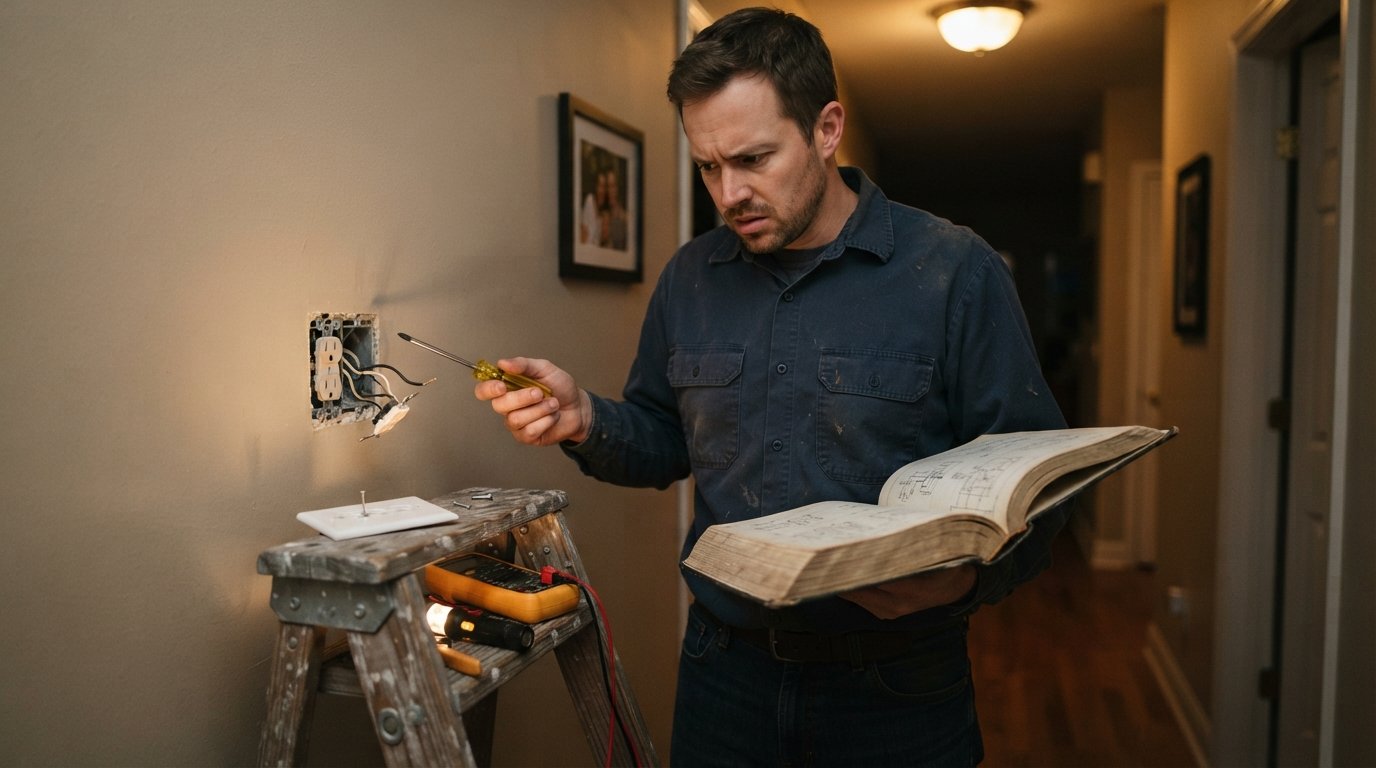
DIY vs Professional Electrical Work: What's Legal for Homeowners
Understand the legal limits of DIY electrical work and when to hire a pro. Call (833)-864-6908 to find licensed electricians and protect your home.

Learn more about Electrical and Wiring Repair for guides, costs, and what to expect.
Compare Electrical and Wiring Repair Pros Near You

Enter your ZIP code to compare top-rated local professionals and request free quotes.
That flickering light switch or the outlet that sparks when you plug in the vacuum cleaner might seem like a quick fix, but before you grab a screwdriver, you need to know what the law allows. The line between a simple DIY project and a code violation is thinner than most homeowners realize, and crossing it can void your insurance, jeopardize your safety, and create a nightmare when you sell your home. Understanding the legal boundaries of DIY vs professional electrical work is not just about saving money; it is about protecting your family and your property.
Electrical work is one of the most regulated trades in the United States, and for good reason. Faulty wiring causes tens of thousands of home fires every year, resulting in billions of dollars in property damage and, tragically, loss of life. While changing a lightbulb is universally safe and legal, replacing a circuit breaker or running new wire through your walls is a different story. The rules vary significantly depending on where you live, but the underlying principle is consistent: if the work involves the permanent wiring of your home, a permit and a licensed professional are usually required.
This guide will walk you through the legal landscape of DIY electrical work, helping you distinguish between tasks you can safely handle and those that demand a pro. We will explore why insurance companies care so much about permits, the true cost of an electrical fire, and how to quickly find your local code requirements. By the end, you will have a clear framework to decide when to roll up your sleeves and when to call a licensed electrician from a trusted network like Repairmen.
The Legal Divide: Minor Repairs vs. Permit-Required Work
The law generally distinguishes between "minor repair work" and "new installation or alteration" of electrical systems. Minor repairs, such as replacing a switch or an outlet, are often permitted for homeowners, provided they do not involve moving the location of the device or adding new circuits. However, even these seemingly simple tasks can be tricky. If you replace a standard outlet with a GFCI (Ground Fault Circuit Interrupter) outlet, you are technically altering the circuit's protection, which may trigger a permit requirement in some jurisdictions.
On the other hand, any work that involves running new wire, adding a circuit, upgrading your electrical panel, or installing a new fixture that requires a new power source is almost universally considered permit-required work. This type of work must be performed by a licensed electrician who can pull the permit and ensure the work meets the National Electrical Code (NEC) and local amendments. Attempting to do this yourself is not only illegal in most areas but also highly dangerous, as it requires a deep understanding of load calculations, wire sizing, and grounding.
To help you navigate this, here is a general breakdown of tasks commonly allowed for homeowners versus those that typically require a professional:
- Typically allowed for homeowners: Replacing a lightbulb, changing a fuse in an older panel (if the panel is designed for user-replaceable fuses), replacing a switch or outlet with an identical model, and resetting a tripped breaker.
- Typically requires a permit and licensed electrician: Installing a new ceiling fan where no fixture existed, adding an outlet to a wall, replacing a circuit breaker, upgrading the electrical service panel, running wiring for a new appliance (like a hot tub or EV charger), and any work inside the main electrical panel.
It is crucial to note that even for the allowed tasks, you must still comply with local codes. For example, some municipalities require that any electrical work, no matter how minor, be inspected by a licensed professional. Always check with your local building department before starting any work. If you are unsure, it is always safer and legally sound to hire a professional. You can find vetted, licensed electricians in your area through platforms like Repairmen, which connects homeowners with pre-screened professionals.
Why Insurance Companies Deny Claims for Unpermitted Work
One of the most significant risks of DIY electrical work is the impact on your homeowners insurance. Most policies include a clause that requires the homeowner to maintain the property in a safe and code-compliant manner. If a fire occurs and the investigation reveals that it was caused by unpermitted or unlicensed electrical work, the insurance company may deny your claim entirely. This means you could be left paying for the damage to your home, your possessions, and potentially your neighbors' property out of pocket.
Insurance companies are not just being difficult; they rely on the permit and inspection process to ensure that the work was done correctly. A permit triggers an inspection by a local code official, who verifies that the wiring is safe and meets current standards. Without this third-party verification, the insurer has no way of knowing if the work was done by a qualified professional or a well-meaning but untrained homeowner. Even if the work was done correctly, the lack of a permit can be enough for an insurer to deny a claim.
Consider this scenario: You decide to finish your basement and run new electrical outlets yourself. You do a neat job, but you fail to get a permit. A few years later, a fire starts in one of those outlets due to a loose connection. The fire department determines the cause, and your insurance adjuster asks for proof of inspection. When you cannot provide it, the claim is denied. You are now responsible for tens or hundreds of thousands of dollars in repairs. This is a gamble that is simply not worth taking.
The Real Cost of an Electrical Fire vs. Hiring a Licensed Electrician
The financial argument for hiring a licensed electrician is compelling when you compare the cost of professional work to the potential cost of an electrical fire. A licensed electrician might charge a few hundred dollars to install a new outlet or a few thousand to upgrade a panel. An electrical fire, however, can cause catastrophic damage that far exceeds the cost of any professional service.
According to the National Fire Protection Association (NFPA), electrical failures or malfunctions were involved in an estimated average of 34,000 home fires per year between 2012 and 2016, resulting in an average of 470 civilian deaths, 1,100 civilian injuries, and $1.4 billion in direct property damage annually. These figures do not account for the emotional toll of losing a home or the indirect costs of temporary housing and lost wages. When you frame the decision as a risk management choice, the cost of a licensed electrician is a small price to pay for peace of mind.
Moreover, hiring a licensed professional often comes with a warranty on the work. If something goes wrong, the electrician is responsible for fixing it. When you do the work yourself, you are solely responsible for any failures. This lack of recourse can be costly if a mistake leads to damage. For homeowners who are planning larger projects, such as a kitchen remodel or a solar panel installation, the expertise of a professional is invaluable. For instance, if you are considering solar energy to reduce your bills, understanding the electrical requirements is essential. You can learn more about solar panel installation and energy savings at SolarEnergy.ai, which provides expert guides on integrating solar systems with your home's electrical infrastructure.
How to Quickly Find Your Local Code Requirements
Electrical codes vary not only from state to state but also from city to city. What is legal in one town may be prohibited in the next. Therefore, it is essential to determine the specific requirements for your location before starting any work. Fortunately, finding this information is usually straightforward if you know where to look.
The first step is to contact your local building department. Most municipalities have a website with a section dedicated to permits and inspections. You can often download a permit application and a checklist of requirements. If the website is not helpful, a quick phone call to the building department can clarify what is allowed. Be specific about the work you intend to do, and ask whether a permit is required and whether a homeowner can pull the permit themselves. In some jurisdictions, homeowners are allowed to pull permits for their own primary residence, but they must still meet all code requirements and pass inspections.
Another valuable resource is the National Electrical Code (NEC), which is the model code adopted by most states. While the NEC itself is not law, it forms the basis of local codes. You can access the NEC through the NFPA website or your local library. However, keep in mind that local amendments may override certain provisions. For a quick overview, many online forums and contractor websites provide summaries of local requirements, but always verify with the official building department. If you are ever in doubt, consult a licensed electrician. They are familiar with local codes and can advise you on the best course of action.
The Hybrid Approach: Doing Prep Work Yourself and Hiring for the Wiring
If you are a handy homeowner who wants to save money, there is a middle ground that is both legal and safe: doing the prep work yourself and hiring a licensed electrician for the actual wiring. This approach allows you to contribute sweat equity while ensuring that the critical, code-sensitive work is done by a professional.
For example, if you are finishing a basement, you can handle the demolition, framing, and drywall installation. You can also run the conduit or drill holes for wiring, but you should leave the actual pulling of wire, making connections, and installing devices to the electrician. This reduces the electrician's time on the job, which can lower your labor costs. Similarly, if you are installing a new light fixture, you can remove the old fixture and prepare the area, but have the electrician make the final connections.
It is important to communicate clearly with your electrician about what you will do and what they will do. Some electricians may not be comfortable with homeowners doing any part of the electrical work, even prep, because they cannot guarantee the quality of the work they did not perform. However, many are willing to work with homeowners who are respectful of their expertise and the legal requirements. Always ensure that the electrician pulls the necessary permits for the work they are doing. This hybrid approach can be a win-win: you save money, and you get the assurance of a professional installation.
When you are ready to hire a professional, platforms like Repairmen can connect you with licensed electricians in your area. Repairmen pre-screens professionals, so you can trust that the person you hire has the proper credentials and insurance. You can also read customer reviews and compare quotes to make an informed decision. For more information on how home warranties can interact with electrical repairs, you might find our guide on how home warranty works helpful.
Ultimately, the decision between DIY and professional electrical work comes down to safety, legality, and risk. While it may be tempting to tackle a project yourself, the potential consequences of unpermitted or improper work are too severe to ignore. By understanding the legal boundaries, checking with your local building department, and hiring licensed professionals for complex tasks, you can protect your home, your family, and your financial future. When in doubt, always err on the side of caution and call a professional.